Calque
Tracing a real aesthetic from a screenshot into a Mosvera document
Mosvera documents were all hand-authored; I wanted to point a vision model at a real reference and have it emit a registry-ready aesthetic going the other direction.
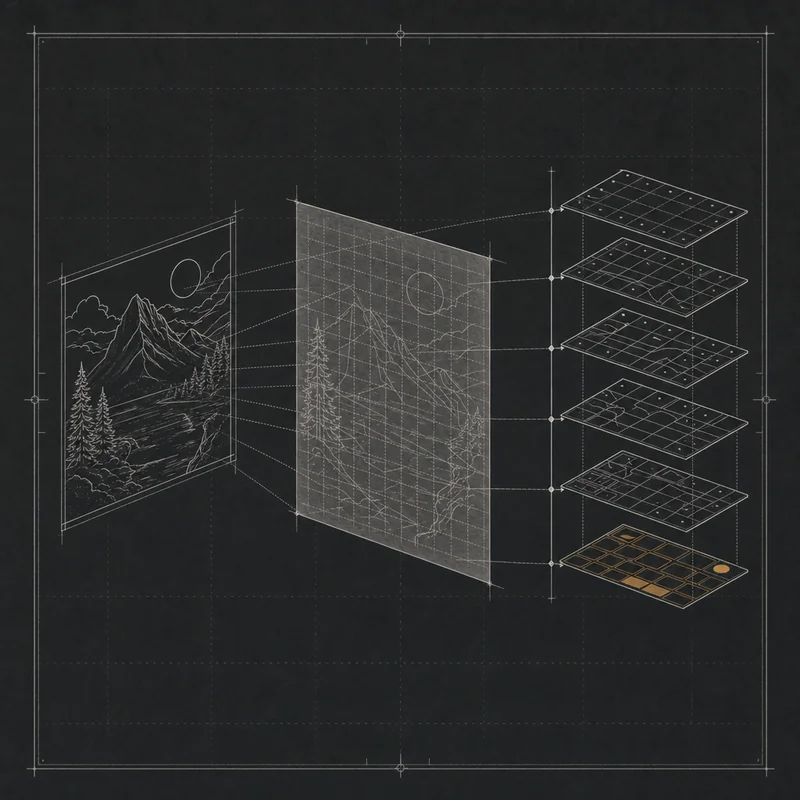
Calque answers the inverse of Mosvera: if Mosvera defines aesthetic intent as declarative documents, those documents had until now all been hand-authored. Calque points a vision-language model at a real-world reference — a URL it screenshots with Playwright, or an uploaded image — reads the aesthetic out of it, and emits Mosvera-compliant documents (palette, template, modifier) with a meaningful generated name, ready to drop into a registry. The name is the metaphor: a calque is a loan-translation, tracing the structure of one thing into another language.
The core of the tool is a dual-VLM A/B pipeline, because the entire point of building it was to answer a question I cared about — can a local model running through Forge hold quality against the cloud on this task? It runs the same reference through multiple models and lets me compare the emitted documents directly, which on day one turned into a four-way A/B that finally gave a grounded answer instead of a hunch. Two of my own assumptions about which model lived on which host were wrong, and the fix was the same one I keep relearning: query the actual model catalog instead of trusting memory.
Calque is deployed internal-only, tailnet-only via split-horizon DNS — adding one line to the internal hosts file makes the name resolve on the tailnet and nowhere else, with TLS for free off the existing wildcard cert. The genesis day also reinforced a security discipline I now apply everywhere: secrets never touch the web layer, and the systemd deploy materializes a locked-down env file with credentials piped straight in and never echoed. It’s a small tool, but it closed the loop on the standard — documents can now be authored from the real world, not just from scratch.